- At launch
- 2023
1,000+
families using Compass within seven months of launch
- The first direct feedback channel between families and local authorities
- What families report now informs service planning across Scottish councils
ARC Scotland · Charity · Web app
Compass is ARC Scotland's free transition planner for young people with additional support needs, their parents and carers, and the professionals who support them. We built it, have looked after it since launch in 2023, and in October 2026 redesigned how people find their way in.
Where it started · 2023
Leaving school brings decisions about money, health and social care, housing, study and work, often all at once. ARC Scotland wanted young people with additional support needs, their families and the professionals around them to have one free place to plan it.
There was no existing system to replace. We worked with ARC to shape the idea into a first release, co-designed with the people it was for, and launched Compass in June 2023. We've supported and developed it ever since.
June 2023
A free planner that turns leaving school into a timeline of what to do and when.
Within seven months
And the first direct feedback channel between families and local authorities.
Since launch
Compass grew into three versions: for young people, for parents and carers, and for professionals.
October 2026
A redesign that helps each audience find the version that's theirs.
The product today
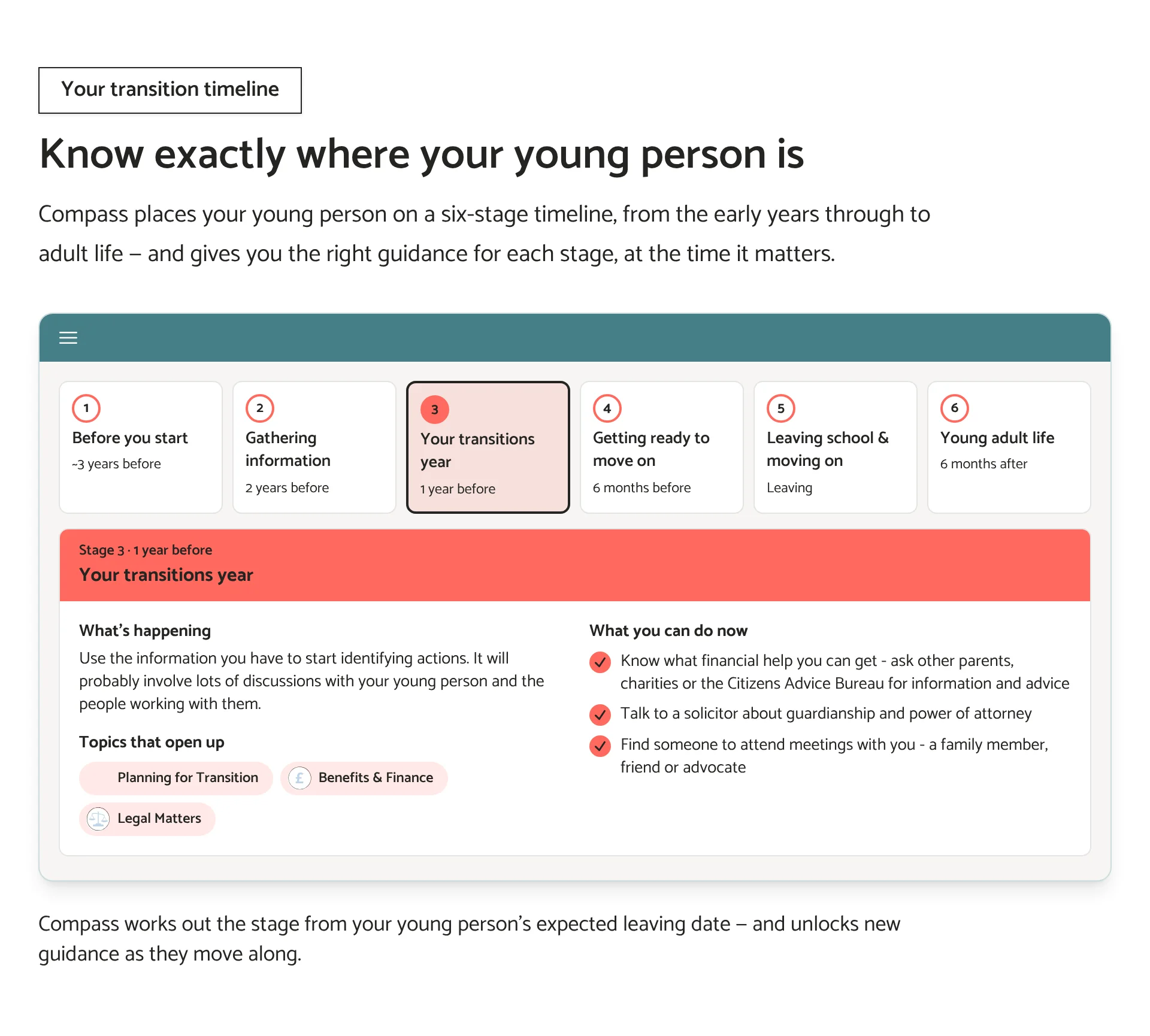
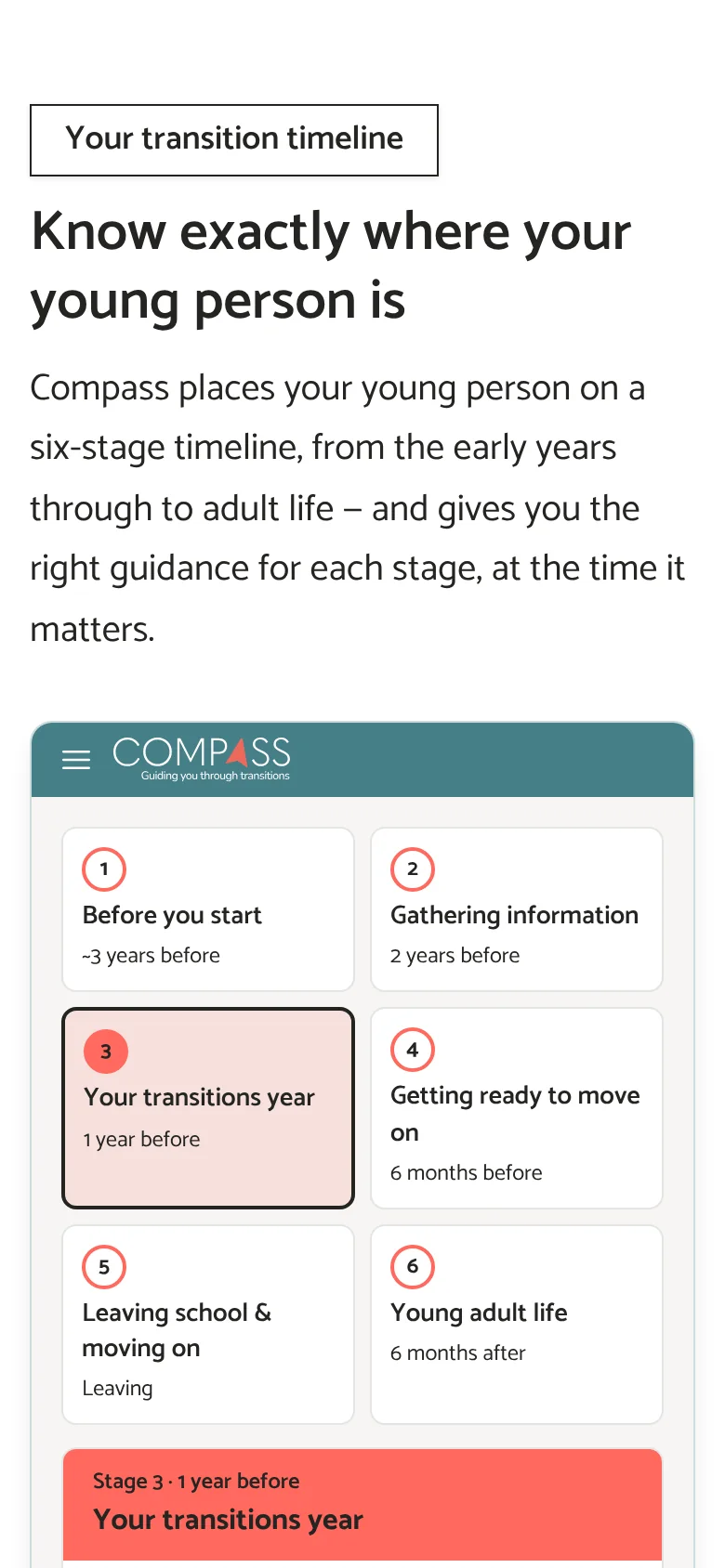
Leaving school brings decisions about money, health and social care, housing, study and work, often all at once. Compass turns them into a timeline. People answer a few simple questions, and Compass shows what to do at each stage, from around three years before leaving school to six months after.
Explore ideas for work and study, find help with life skills like moving out or learning to drive, and keep track of important tasks. Young people can look around as a guest before making an account.
A personalised to-do list for their young person's stage, plain-English guidance on benefits, health, housing, care and rights, and reminders for key dates. One account can follow more than one young person.
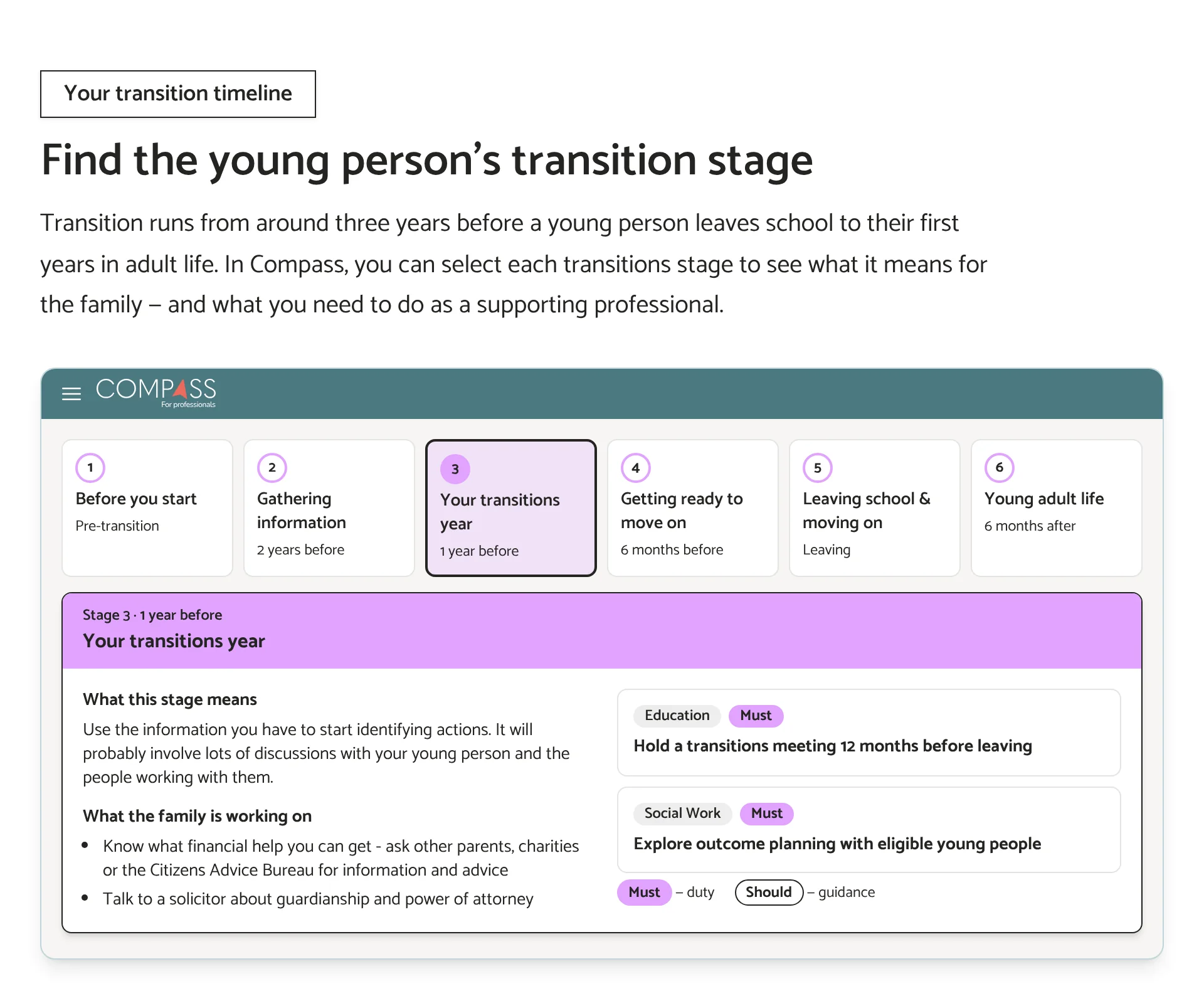
Find a young person's stage and see the duties and guidance for education, social work, health and the third sector, each linked to the legislation behind it. Free for every practitioner in Scotland, with a toolkit to share with teams.
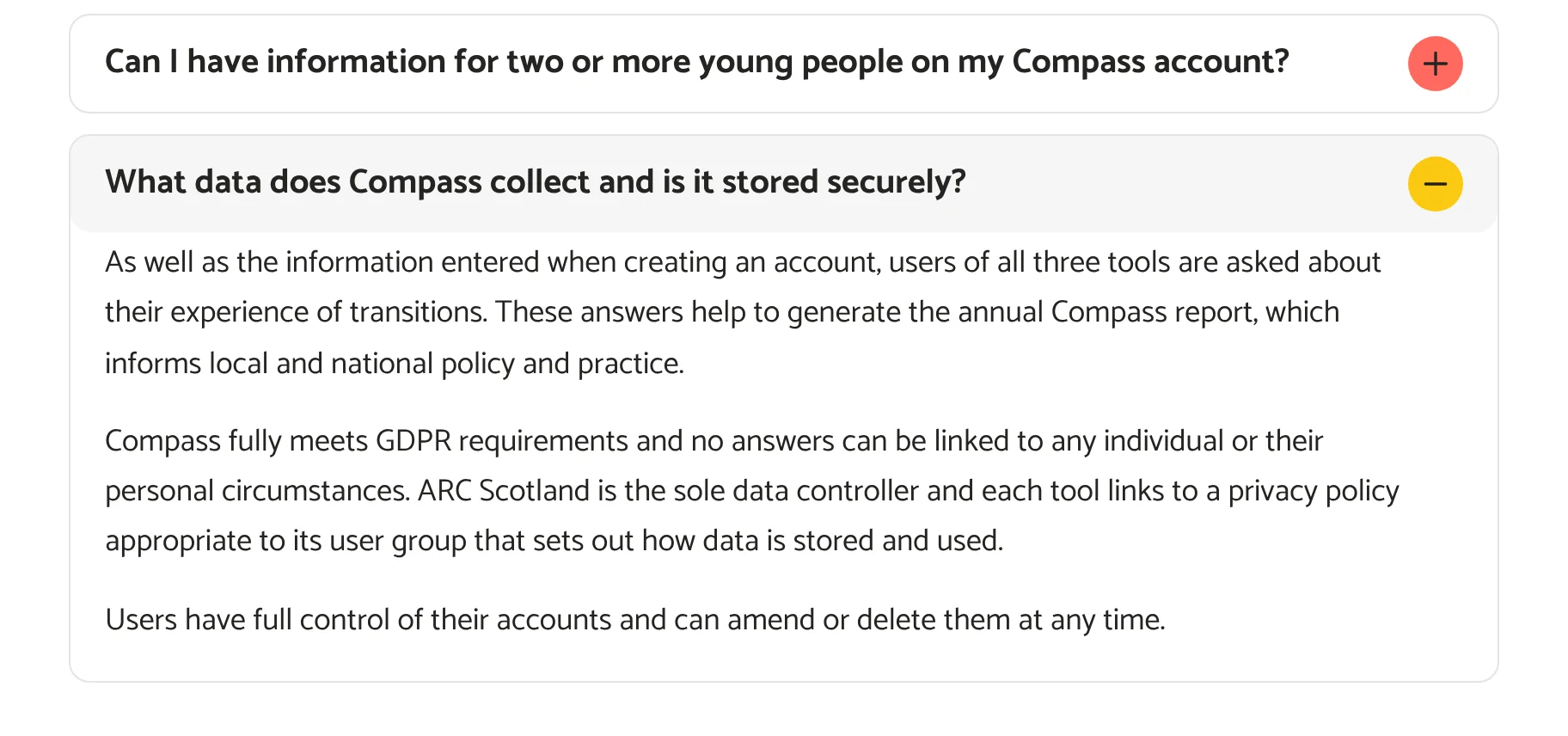
As people use Compass, it asks short questions about how their transition is going. Answers can't be linked to anyone. ARC Scotland turns them into an annual Compass report that informs local and national policy and practice.
The redesign · October 2026
Compass had grown into three tools, but its public page still did everything at once. Young people, parents and carers, and professionals all landed in the same place and had to work out which version was theirs, what it would do for them, and whether it was safe to sign up.
ARC asked for a front door that answers those three questions, in that order, for each person.
ARC set the brief and reviewed every page. We designed the prototypes, worked through ARC's review, then built, tested and released the new pages.
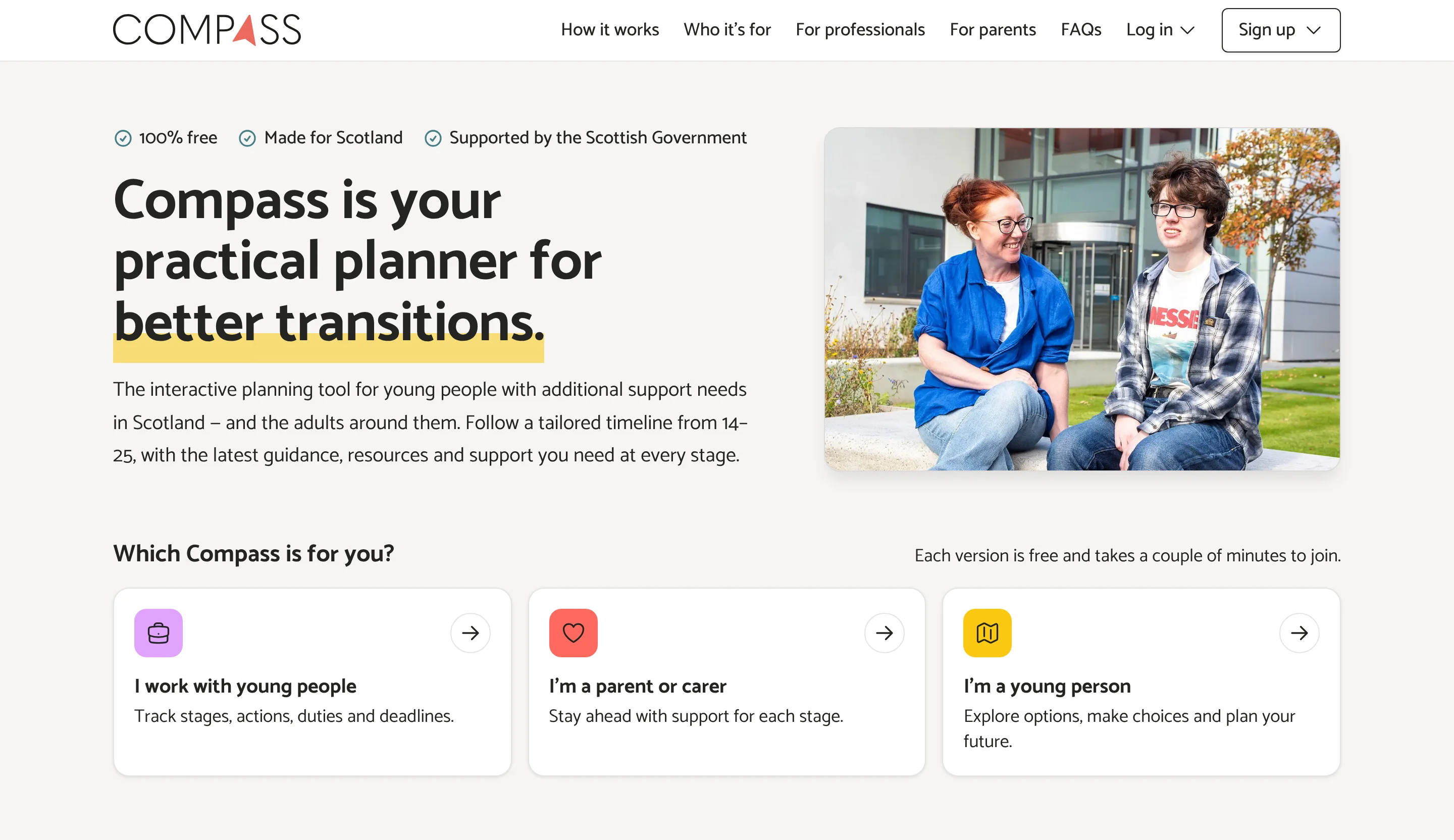
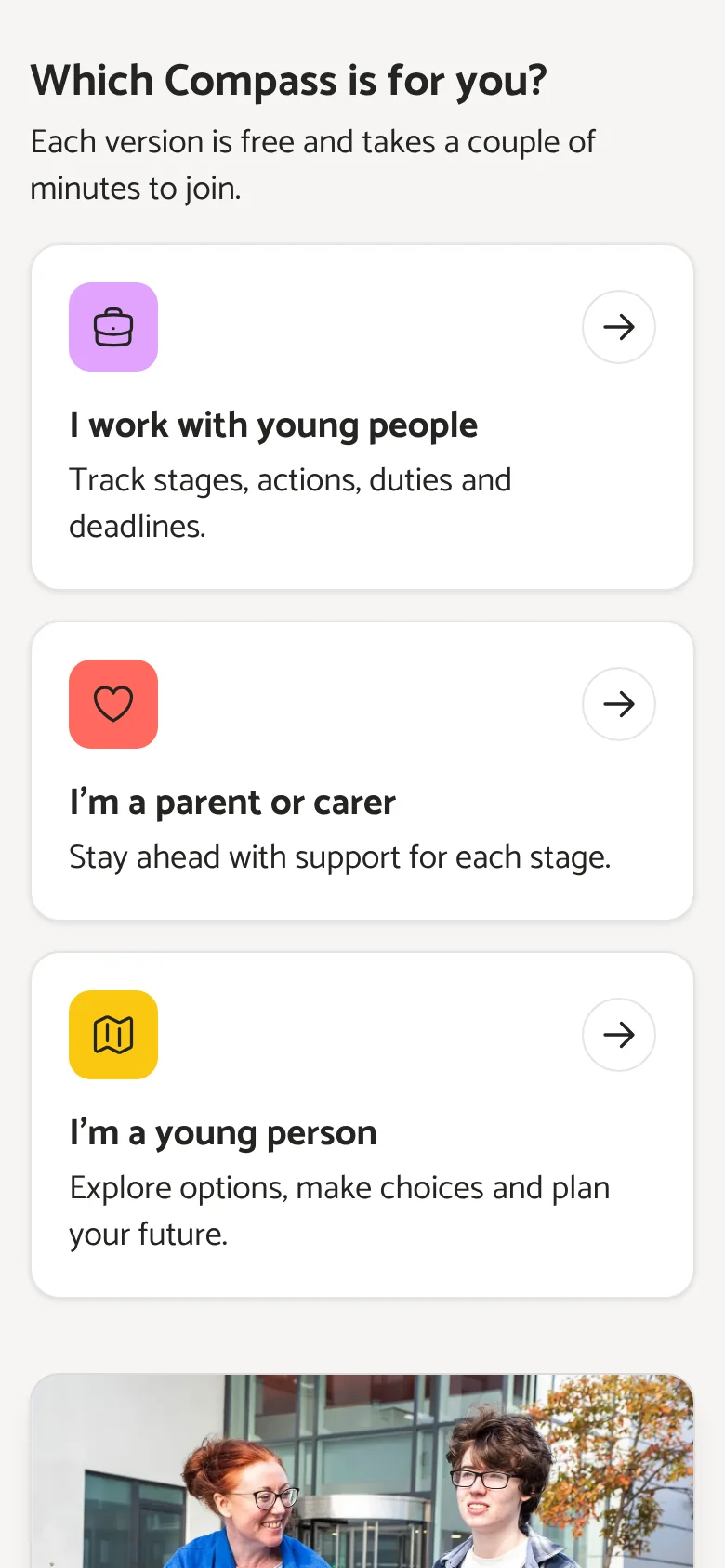
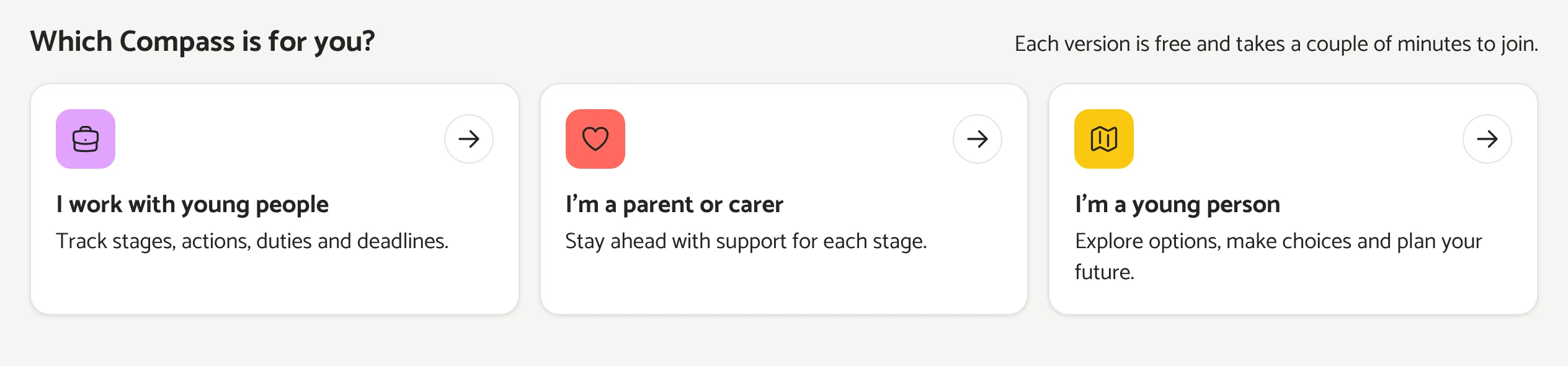
The home page opens with one question: which Compass is for you? The three answers are written the way people describe themselves: I work with young people, I'm a parent or carer, I'm a young person. Each audience keeps its own colour on its own pages, so people can tell they're in the right place.
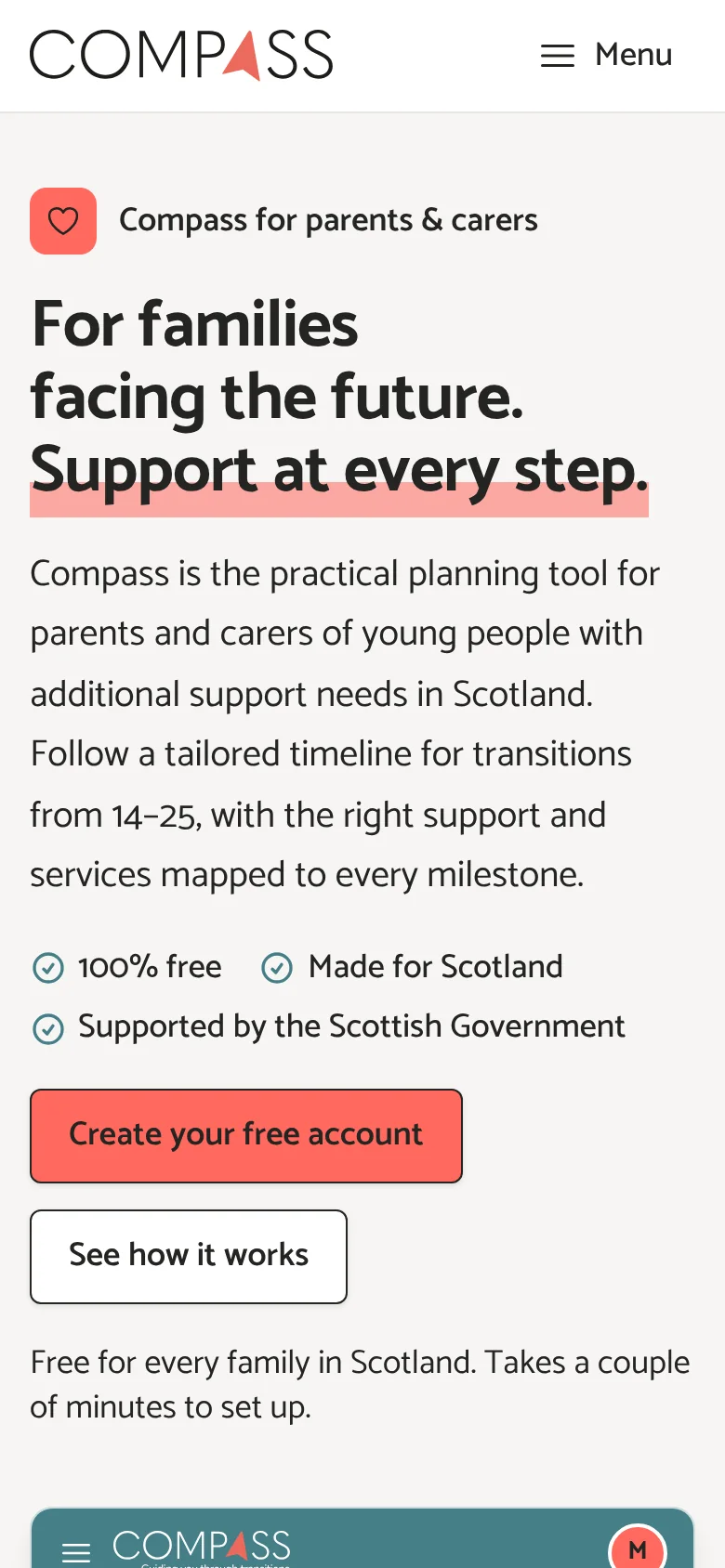
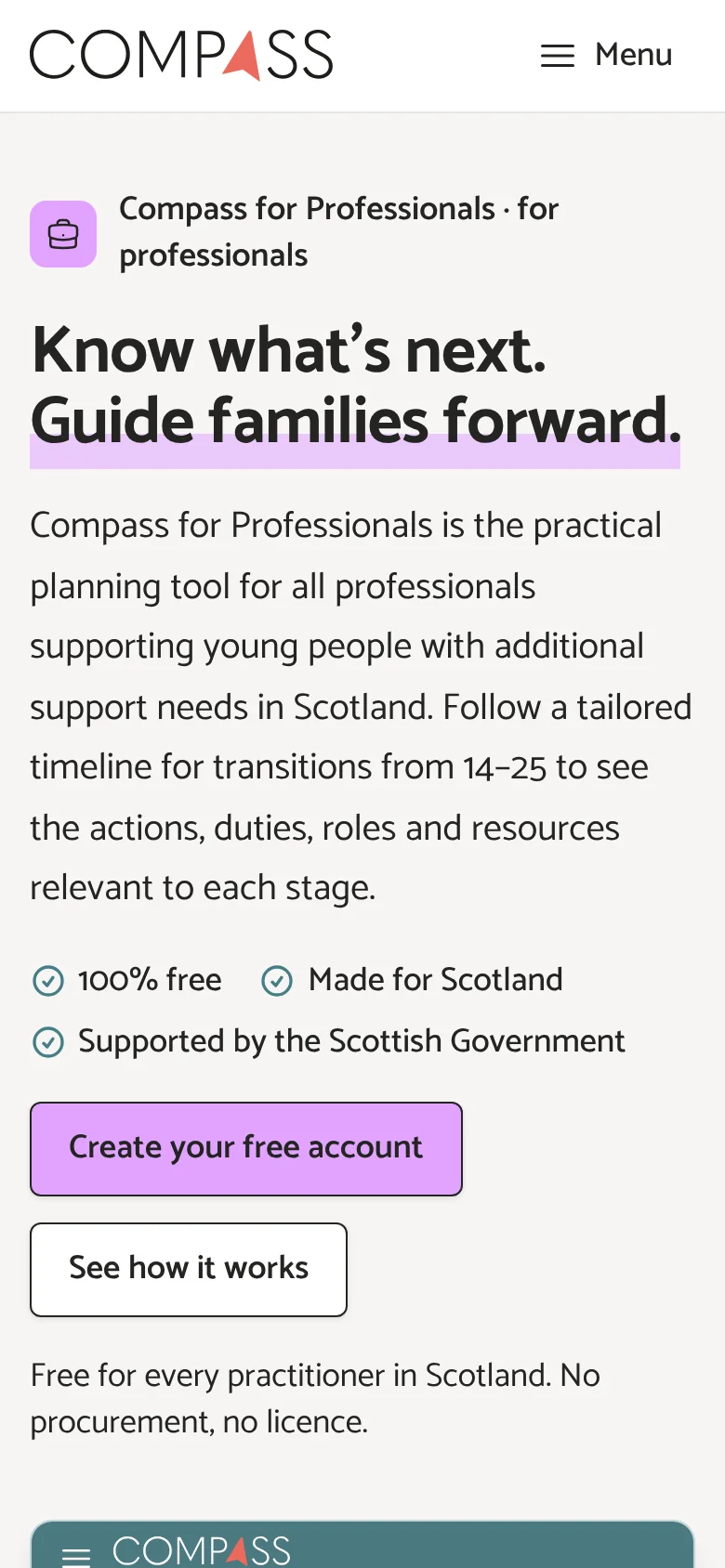
Parents and carers, and professionals, now each have a page of their own. Families read about stages, to-do lists and reminders in plain English. Professionals see duties, roles and the legislation behind them. Young people can go straight in and look around as a guest.
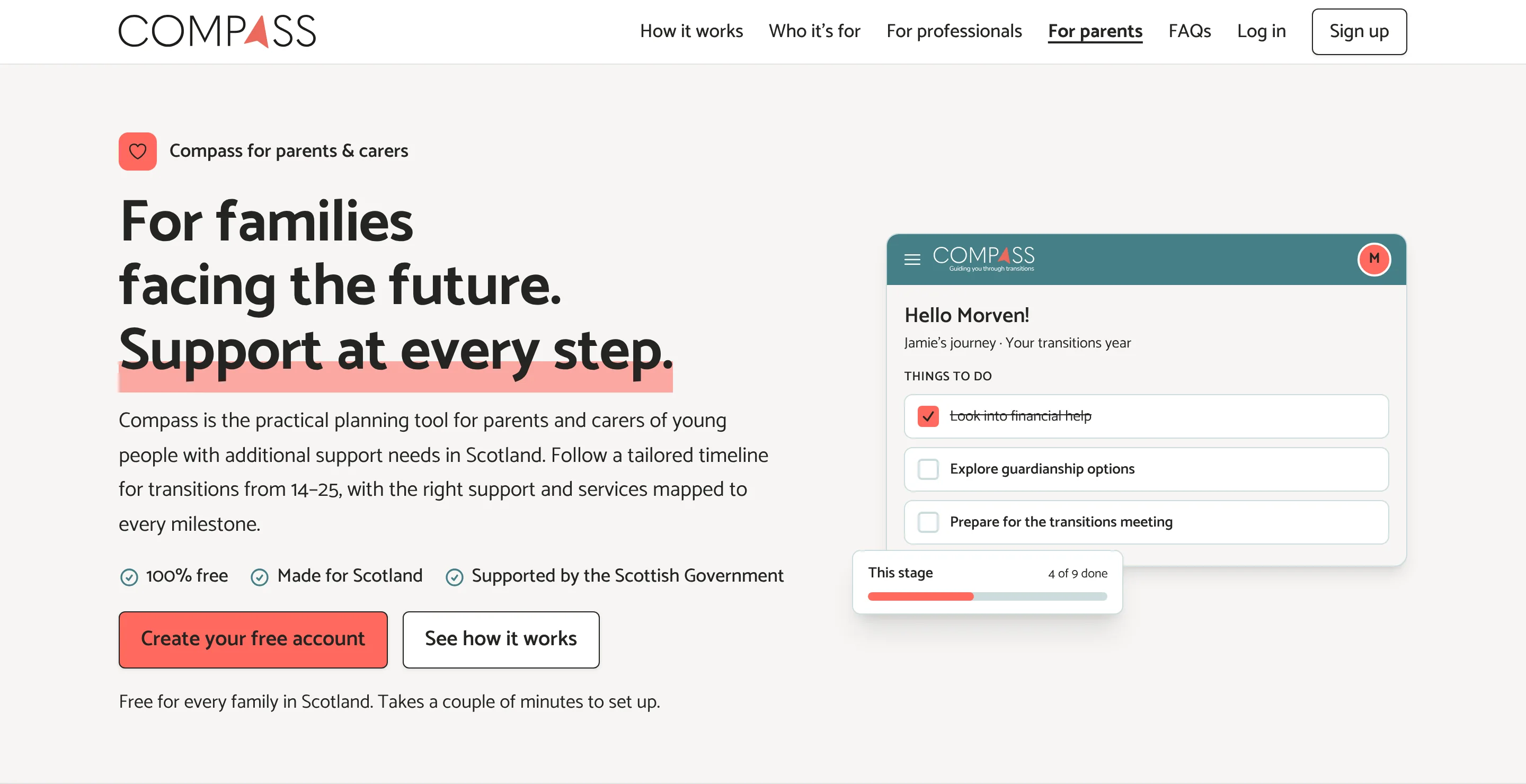
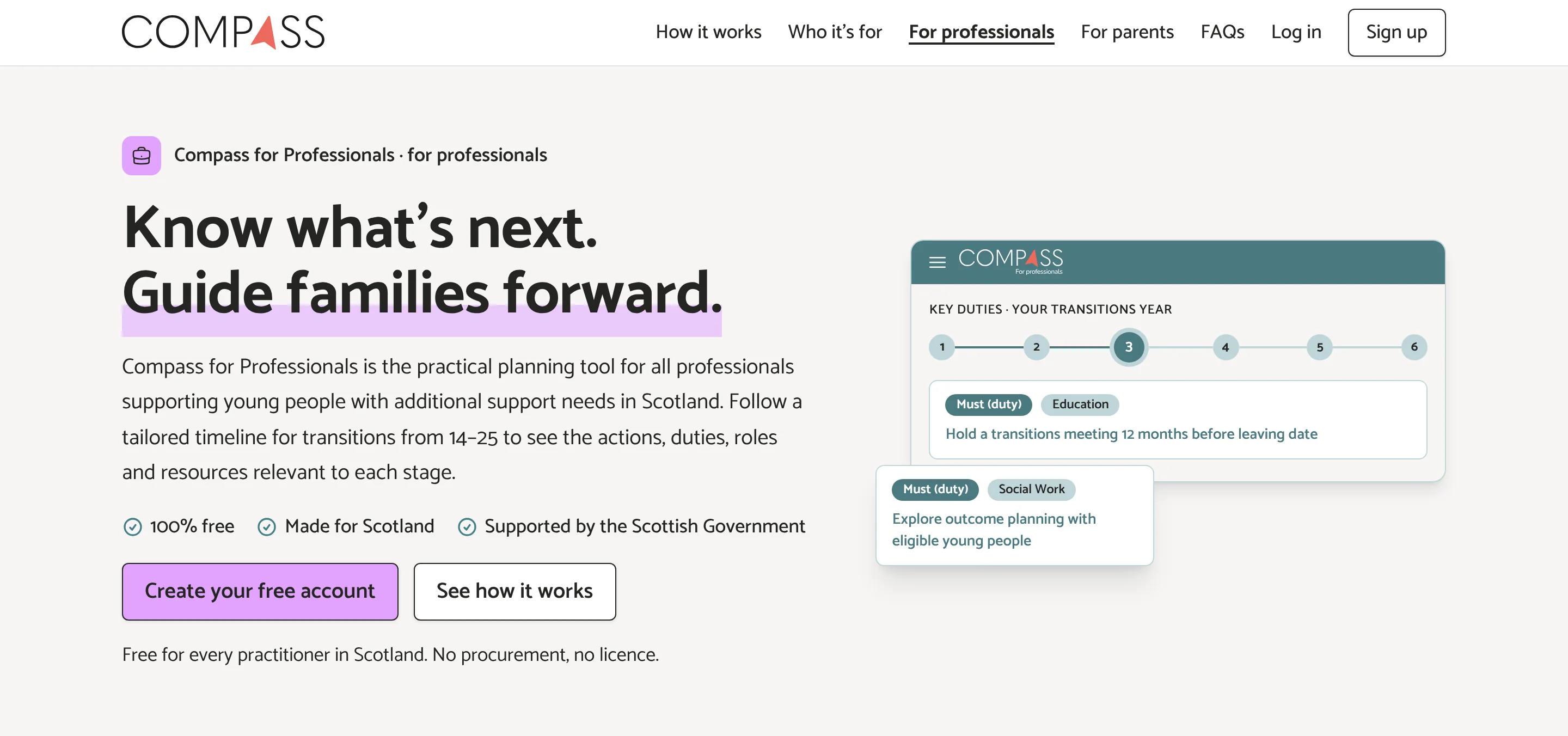
Each page previews what people will actually use: a parent's to-do list, the six-stage transition timeline, transition topics, and a professional's key duties at each stage. The previews are built in HTML rather than pasted in as pictures, so they stay sharp at any zoom and screen readers can read them.
Every page says up front that Compass is free, made for Scotland and supported by the Scottish Government. Proof points show where the guidance comes from: more than 300 conversations with young people and over 100 hours of research. And there's a plain answer to what data Compass collects and who can see it.

Every version now lives at compass.arcscotland.org.uk, under /parents, /professionals and /young-people. Old links to the separate sub-domains redirect, so bookmarks keep working.
Text is at least 18px and every target at least 44px. Layouts were checked on 390px phones and at 400% zoom.
Automated WCAG 2.2 AA tests run in the release pipeline, alongside browser tests of each sign-up journey.
On a phone
Each page reflows to a single column. On the home page the route choices come before the photography, so they're the first thing people reach.
Results
1,000+
families using Compass within seven months of launch
Measuring
Sign-up results to follow
The new pages went live between 13 and 20 October 2026. We'll add results here once there's enough data to compare fairly with the old page.
What we'll compare: account sign-ups for each version, and how many visitors to each page go on to sign up.
Tell us what you're planning. You'll talk to the engineer who'd lead your project.